Packaging optimisation for PET bottles
Reducing bottle weight while maintaining performance
Evaluate your PET bottle’s cost and carbon footprint savings with Sidel’s Packaging optimisation tool. Input your current data and explore the impact of potential improvements.
Raw materials account for 70–80% of a bottle's cost and have a major impact on its carbon footprint. For over 40 years, packaging optimisation research and development has been at the core of Sidel’s approach. Today, our design and technology help you generate significant cost and CO2 emission savings while safeguarding bottle qualit
When we optimise packaging, we focus on finding the right balance between best-in-class bottle weight, an efficient process with low energy consumption and the target bottle performance. Even with reduced weight, the bottle remains highly resistant throughout the entire supply chain and continues to project your brand values to consumers.
To define the ideal solution, Sidel experts assess all relevant requirements: bottle weight, performance, shelf-life, line output, energy consumption and more. Based on this analysis, they design a packaging solution that meets your technical constraints while protecting product quality and brand image. Our packaging optimisation approach is structured to guide you from initial assessment to industrial implementation.
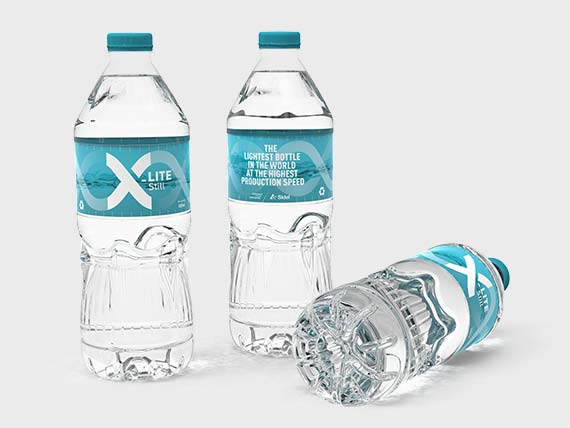
Our depth of expertise in PET bottle lightweighting is clearly visible in the evolution of our 0.5 L water bottle. Since 1990, we have achieved significant improvements on this 500 ml container in multiple areas while maintaining performance, always comparing today’s designs with the 1990 reference. Sidel’s packaging engineers apply the same optimisation philosophy across all market categories to deliver sustainable, efficient PET packaging for every product type.